Custom Design Press | Jan 6, 2023

Epson XP-15000 vs. ET-8550: Which Is Better for DTF Printing?

If you're researching affordable ways to start DTF printing, you've probably come across two popular Epson models: the Epson Expression Photo HD XP-15000 and the Epson EcoTank Photo ET-8550.

Both printers were originally manufactured for traditional inkjet printing, but they have been adapted by some users and third-party suppliers for DTF applications.


So which one should you choose?


At Custom Design Press, we've worked with both printer models as part of our DTF printing experience. While both can be used in certain converted DTF setups, they have different ink systems, maintenance considerations, and operating costs.


Before choosing either printer, it's important to understand what you're actually purchasing.

First, Understand What a Converted DTF Printer Is

Neither the standard Epson XP-15000 nor the standard Epson ET-8550 is sold by Epson as a dedicated DTF printer.


These printers are originally designed for conventional inkjet applications.


To use them for DTF printing, third-party conversion processes typically involve replacing the original ink with compatible DTF ink, configuring the printer for DTF film, and using specialized RIP software.


Depending on the conversion, additional modifications or accessories may be necessary.


Converting a printer can affect warranty coverage, reliability, and manufacturer support.


Important: A converted DTF printer is not the same as a purpose-built commercial DTF machine.

Epson XP-15000: Overview

The XP-15000 is a compact, wide-format photo printer that uses six individual ink cartridges in its original configuration.


In converted DTF applications, compatible refillable cartridges or other third-party ink delivery systems may be used.


Potential Advantages

• Compact design

• Can handle prints up to approximately 13 inches wide on supported media

• Lower initial hardware cost in many markets

• Familiar desktop printer format

• Suitable for learning some aspects of DTF production


Potential Disadvantages

• Small cartridge-based ink capacity

• Frequent attention to ink levels

• White ink settling concerns

• Manual maintenance requirements

• Potential cartridge recognition and ink delivery issues

• Conversion-related reliability limitations


The XP-15000 may appeal to someone who wants to experiment with smaller-scale DTF printing, but it requires a realistic understanding of the work involved.

Epson ET-8550: Overview

The ET-8550 is a six-color EcoTank photo printer that uses refillable ink tanks rather than traditional individual ink cartridges.


Its original design is intended for photographic and document printing.


In converted DTF configurations, the tank system may be adapted for compatible DTF inks.


Potential Advantages

• Larger built-in ink storage capacity

• Less frequent manual ink refilling

• Wide-format printing capability

• Tank-based ink system

• Potentially convenient for regular production


Potential Disadvantages

• Higher initial purchase cost

• White ink settling and circulation concerns

• Tank and ink pathway maintenance

• Potential conversion-related complications

• Printhead and ink delivery problems

• No manufacturer support for unauthorized DTF modifications


A larger ink tank does not automatically mean fewer white ink problems.


In fact, white ink management remains one of the most important considerations when using any converted desktop printer.

XP-15000 vs. ET-8550: Side-by-Side Comparison

Original ink system: XP-15000 — Individual cartridges; ET-8550 — Refillable ink tanks.


Original ink configuration: XP-15000 — Six-color; ET-8550 — Six-color.


Maximum standard print width: XP-15000 — Approximately 13 inches; ET-8550 — Approximately 13 inches.


Initial hardware cost: XP-15000 — Generally lower; ET-8550 — Generally higher.


Ink storage: XP-15000 — Cartridge-based; ET-8550 — Tank-based.


White ink maintenance: XP-15000 — Conversion dependent; ET-8550 — Conversion dependent.


DTF support from Epson: XP-15000 — No; ET-8550 — No.


RIP software: XP-15000 — Compatible third-party setup required; ET-8550 — Compatible third-party setup required.


Best consideration: XP-15000 — Lower-cost experimentation; ET-8550 — Tank-based workflow preference.


Actual DTF performance depends on the conversion, ink delivery setup, RIP configuration, and maintenance practices.

Which Printer Is Easier to Maintain?

This is one of the most important questions to ask.


Neither printer eliminates the maintenance challenges associated with DTF printing.


Both require attention to ink flow, nozzle condition, capping systems, and white ink behavior.


With the XP-15000, cartridge handling may be an additional consideration.


With the ET-8550, users need to understand how the converted ink tanks and ink pathways are managed.


The printer with the larger ink capacity isn't automatically the easier printer to maintain.


Your experience will depend heavily on the quality of the conversion and how the equipment is configured.

What About Print Quality?

Both printers are capable of producing detailed inkjet output in their original applications.


However, DTF print quality depends on much more than the printer model.


Important factors include:

• Quality of DTF ink

• Proper white ink underbase

• RIP software configuration

• Nozzle condition

• Print resolution and passes

• Film compatibility

• Artwork quality

• Color management


A poorly maintained printer can produce inconsistent results regardless of its original specifications.

The Hidden Costs of Converted DTF Printers

When comparing prices, don't look only at the cost of the printer.


You may also need to purchase:

• DTF inks

• PET film

• Adhesive powder

• RIP software

• A suitable powder-curing solution

• Cleaning supplies

• Waste ink accessories

• Replacement maintenance components

• A heat press


You should also budget for failed prints, testing materials, and possible equipment repairs.


Sometimes the printer with the lower purchase price becomes more expensive over time because of downtime and maintenance.

When Should You Consider a Commercial DTF Printer?

If you're printing occasionally, a converted desktop printer may be enough for experimentation.


However, if you're regularly producing large quantities of transfers, you may eventually need equipment designed for higher-volume DTF production.


Commercial DTF printers can offer wider media handling, specialized white ink systems, and integration with automated powder and curing equipment.


They also require maintenance, proper ventilation, suitable workspace, and a larger financial investment.


Before upgrading, evaluate your production volume, customer demand, available space, and equipment support.

What We’ve Learned at Custom Design Press

After working with desktop DTF equipment and moving into commercial printing, one lesson stands out:


Choose equipment based on the work you actually plan to produce—not simply because a printer is popular in online groups.


A printer that works well for someone producing a few transfers per week may not be practical for a business filling larger daily orders.


Think about how much maintenance you're willing to perform, how much downtime you can tolerate, and whether the equipment can support your long-term goals.

Can You Start Without Buying Either Printer?

Absolutely.


If your primary goal is to sell custom shirts rather than learn printer maintenance, purchasing ready-to-press DTF transfers may be a better starting point.


You can invest in a reliable heat press, develop your designs, and build your customer base before purchasing production equipment.


Custom Design Press offers DTF printing services and printer-related products for customers at different stages of their journey.

Frequently Asked Questions

Is the Epson XP-15000 a real DTF printer?


No. It is originally a photo inkjet printer that can be modified by third parties for DTF applications.


Is the Epson ET-8550 better for DTF?


Not automatically. It has a different ink delivery system, but actual DTF performance depends on the conversion, maintenance, and printing setup.


Can converted Epson printers print white DTF ink?


Certain third-party conversion configurations can support white DTF ink, but they require specialized setup and maintenance.


Are converted DTF printers good for business use?


They may work for some low-volume applications, but businesses should carefully consider reliability, maintenance, and production capacity.

Final Thoughts

The Epson XP-15000 and ET-8550 can both play a role in learning DTF printing, but neither is a maintenance-free solution.

The right choice depends on your budget, technical comfort, production needs, and willingness to troubleshoot equipment.

At Custom Design Press, we offer DTF printing services, supplies, and printer bundle options for customers exploring the world of DTF.

Visit www.CustomDesignPress.com to explore available products and learn more.

Custom Design Press LLC — Established in 2018. Helping creators bring their designs to life.

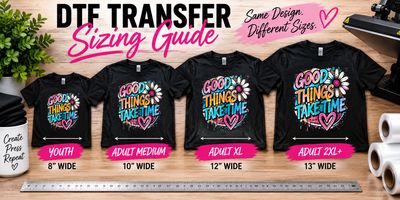
Not sure what size transfer you need? Custom Design Press is always happy to help you choose a size that works with your design and garment.

Custom Design Press

More Posts

DTF Transfer Sizing Guide: What Size Should Your Shirt Design Be?DTF Transfer Sizing Guide: What Size Should Your Shirt Design Be?
DTF Transfer Sizing Guide: What Size Should Your Shirt Design Be?

Choosing the right size for a DTF transfer can make the difference between a shirt that looks professionally made and one that feels too small, too large or awkwardly placed.

In this guide, I’ll walk you through practical starting sizes for common shirt designs, left-chest prints, youth apparel and larger garments—plus a few things to consider before you press.

What Are DTF Transfers? A Beginner’s Guide to Direct-to-Film PrintingWhat Are DTF Transfers? A Beginner’s Guide to Direct-to-Film Printing
What Are DTF Transfers? A Beginner’s Guide to Direct-to-Film Printing

DTF transfers make it possible to create vibrant, full-color apparel without owning a DTF printer. In this beginner-friendly guide, I’ll explain what DTF transfers are, how they work, what you need to apply them, and why they’ve become such a popular option for custom apparel and small T-shirt businesses.

Why Is My DTF White Ink Not Printing? Common Causes and SolutionsWhy Is My DTF White Ink Not Printing? Common Causes and Solutions
Why Is My DTF White Ink Not Printing? Common Causes and Solutions

Few things are more frustrating than preparing a beautiful design, sending it to your DTF printer, and discovering that your white ink isn’t printing correctly.

Maybe your colors look fine, but the white underbase is missing. Maybe the white prints with lines or gaps. Or perhaps your printer worked yesterday and suddenly refuses to print white today.

White ink problems are among the most common challenges in DTF printing.

At Custom Design Press, our hands-on experience includes converted Epson printers and commercial DTF equipment. One lesson stands out: identifying the actual problem is much more effective than randomly changing settings.

Here’s a practical way to work through the possibilities.

10 DTF Printing Mistakes Beginners Should Avoid

Getting started with DTF printing can be exciting, especially when you see your first colorful design come off the printer. But anyone who has spent time working with DTF equipment knows that things don’t always go according to plan.

DTF vs. Sublimation: What's the Difference and Which Is Better?

If you're new to custom apparel printing, you've probably heard people talk about DTF printing and sublimation. Both methods can create beautiful, colorful designs, but they work very differently.

One of the most common questions beginners ask is, "Should I use DTF or sublimation?"

The answer depends on what you're printing, the type of fabric you're using, your budget, and what you want your finished product to look and feel like.

At Custom Design Press (CDP), we've been in the custom printing business since 2018, with hands-on DTF printing experience. We've worked with everything from converted desktop printers to commercial DTF equipment, and we've learned that choosing the right printing method can make a big difference in your finished products.

Whether you're starting a small apparel business, creating shirts for family events, or simply looking for professional transfers, this guide will help you understand the differences between DTF and sublimation.