Custom Design Press | 21 days ago

DTF Transfer Sizing Guide: What Size Should Your Shirt Design Be?

Choosing the right size for a DTF transfer can make the difference between a shirt that looks professionally made and one that feels too small, too large or awkwardly placed.

In this guide, I’ll walk you through practical starting sizes for common shirt designs, left-chest prints, youth apparel and larger garments—plus a few things to consider before you press.

Why DTF Transfer Size Matters

There isn’t one perfect transfer size that works for every shirt. The right size depends on the garment size, the shape of the artwork, where the design will be placed and the overall look you’re trying to achieve.


A 10-inch-wide design may look great on an adult medium but appear too small on a 3XL shirt. At the same time, simply making every design as large as possible doesn’t necessarily make the shirt look better.


Think of transfer sizes as starting points rather than strict rules. Before pressing, place the transfer on the garment and look at the overall proportions. You want the design to look intentional, centered and balanced with enough shirt visible around it.

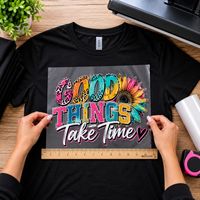
Hands positioning a colorful DTF transfer on a black T-shirt with a ruler used to check the design width.Hands positioning a colorful DTF transfer on a black T-shirt with a ruler used to check the design width.

Measure your DTF transfer against the garment before pressing to make sure the size and placement look balanced.

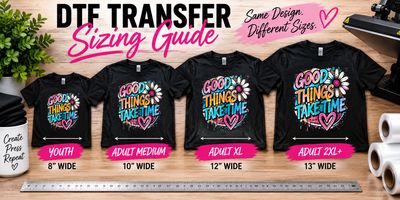
DTF Transfer Size GuideDTF Transfer Size Guide

Here are some practical starting points when deciding how wide to make your DTF transfers.

Youth Shirts

A front design around 7–9 inches wide works well for many youth sizes. Smaller youth garments may need an even smaller design, so always compare the transfer to the actual shirt before pressing.

Adult Small–Large

For a standard full-front design, approximately 10–11.5 inches wide is a good starting range. The shape of the artwork matters too—a tall narrow design will look very different from a wide design at the same width.

Adult XL–2XL

Approximately 11–12.5 inches wide works well for many full-front designs. You may want to increase the size slightly when moving into larger garments so the artwork stays proportional.

Adult 3XL and Larger

Approximately 12–13.5 inches wide is a useful starting point for many designs. Don't automatically make the transfer huge just because the shirt is larger. Look at the printable area of the garment and the proportions of the artwork.

Left-Chest Designs

Most left-chest designs fall around 3.5–4.5 inches wide. Smaller adult garments often look good around 4 inches, while larger sizes may benefit from approximately 4.5 inches.

Hoodies and Sweatshirts

A front design around 10–12 inches wide works well for many hoodies. Remember that the pocket changes the usable printing area, so the design usually needs to sit between the neckline and pocket rather than being centered across the entire garment.

Back Designs

For standard adult back designs, approximately 11–13.5 inches wide is a good starting range. Names, numbers and team apparel may require different sizing depending on the layout.

Placement Matters Just as Much as Size

Even a perfectly sized transfer can look wrong if it’s placed too high or too low.

For a standard full-front adult design, starting approximately 3 inches below the collar is a useful guideline. From there, visually check the placement before pressing.

For hoodies, consider both the neckline and the top of the pocket. You want enough space around the artwork so the design doesn’t feel crowded.

Don’t Size Every Design the Same Way

One of the biggest mistakes beginners make is choosing one width and using it for everything.

Artwork proportions matter. A square design, tall design, wide design and circular design can all look completely different at 11 inches wide.

Instead of focusing only on the measurement, ask yourself: Does this design look proportional on this particular garment?

When possible, lay the transfer on the shirt before pressing. That quick visual check can prevent a lot of placement and sizing mistakes.

Not sure what size transfer you need? Custom Design Press is always happy to help you choose a size that works with your design and garment.

Custom Design Press

More Posts

What Are DTF Transfers? A Beginner’s Guide to Direct-to-Film PrintingWhat Are DTF Transfers? A Beginner’s Guide to Direct-to-Film Printing
What Are DTF Transfers? A Beginner’s Guide to Direct-to-Film Printing

DTF transfers make it possible to create vibrant, full-color apparel without owning a DTF printer. In this beginner-friendly guide, I’ll explain what DTF transfers are, how they work, what you need to apply them, and why they’ve become such a popular option for custom apparel and small T-shirt businesses.

Why Is My DTF White Ink Not Printing? Common Causes and SolutionsWhy Is My DTF White Ink Not Printing? Common Causes and Solutions
Why Is My DTF White Ink Not Printing? Common Causes and Solutions

Few things are more frustrating than preparing a beautiful design, sending it to your DTF printer, and discovering that your white ink isn’t printing correctly.

Maybe your colors look fine, but the white underbase is missing. Maybe the white prints with lines or gaps. Or perhaps your printer worked yesterday and suddenly refuses to print white today.

White ink problems are among the most common challenges in DTF printing.

At Custom Design Press, our hands-on experience includes converted Epson printers and commercial DTF equipment. One lesson stands out: identifying the actual problem is much more effective than randomly changing settings.

Here’s a practical way to work through the possibilities.

10 DTF Printing Mistakes Beginners Should Avoid

Getting started with DTF printing can be exciting, especially when you see your first colorful design come off the printer. But anyone who has spent time working with DTF equipment knows that things don’t always go according to plan.

Epson XP-15000 vs. ET-8550: Which Is Better for DTF Printing?

If you're researching affordable ways to start DTF printing, you've probably come across two popular Epson models: the Epson Expression Photo HD XP-15000 and the Epson EcoTank Photo ET-8550.

DTF vs. Sublimation: What's the Difference and Which Is Better?

If you're new to custom apparel printing, you've probably heard people talk about DTF printing and sublimation. Both methods can create beautiful, colorful designs, but they work very differently.

One of the most common questions beginners ask is, "Should I use DTF or sublimation?"

The answer depends on what you're printing, the type of fabric you're using, your budget, and what you want your finished product to look and feel like.

At Custom Design Press (CDP), we've been in the custom printing business since 2018, with hands-on DTF printing experience. We've worked with everything from converted desktop printers to commercial DTF equipment, and we've learned that choosing the right printing method can make a big difference in your finished products.

Whether you're starting a small apparel business, creating shirts for family events, or simply looking for professional transfers, this guide will help you understand the differences between DTF and sublimation.