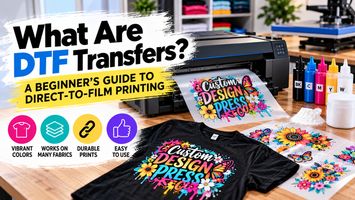
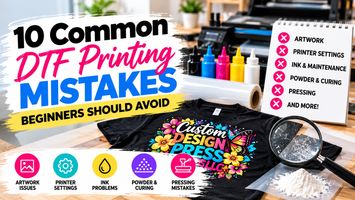
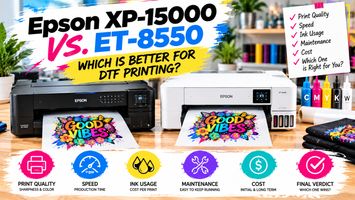
DTF stands for Direct-to-Film printing.
Instead of printing directly onto a shirt, a specialized printer prints your design onto a transparent PET film using CMYK and white inks.
An adhesive powder is applied to the printed design, then cured using controlled heat. Once the transfer is properly prepared, it can be applied to compatible fabrics using a heat press.
The basic DTF process includes:
1. Preparing your artwork in a compatible design program.
2. Printing the design onto DTF film using specialized inks.
3. Applying adhesive powder to the wet printed ink.
4. Curing the powder according to the manufacturer's recommendations.
5. Heat pressing the finished transfer onto your garment.
6. Peeling the film according to the film's instructions and completing any recommended finishing press.
One of the biggest advantages of DTF printing is its versatility.
DTF transfers can be applied to many different fabrics, including cotton, polyester, and various fabric blends.
They also work on light and dark garments because the printing process includes a white ink underbase.
This means you can create colorful designs for black shirts, navy hoodies, white T-shirts, and many other apparel options without completely changing your printing process.
Why DTF Has Become So Popular
DTF printing has become an attractive option for small businesses because it allows full-color artwork without the extensive setup that some traditional printing methods require.
It's especially useful for:
- Custom T-shirts and hoodies
- Family reunions and special events
- School spirit apparel
- Sports and team clothing
- Small business uniforms
- Personalized gifts
- Small production runs and custom orders
You also don't have to own a DTF printer to take advantage of the technology.
Businesses like Custom Design Press offer ready-to-press DTF transfers, allowing customers to apply professional transfers using their own heat press.